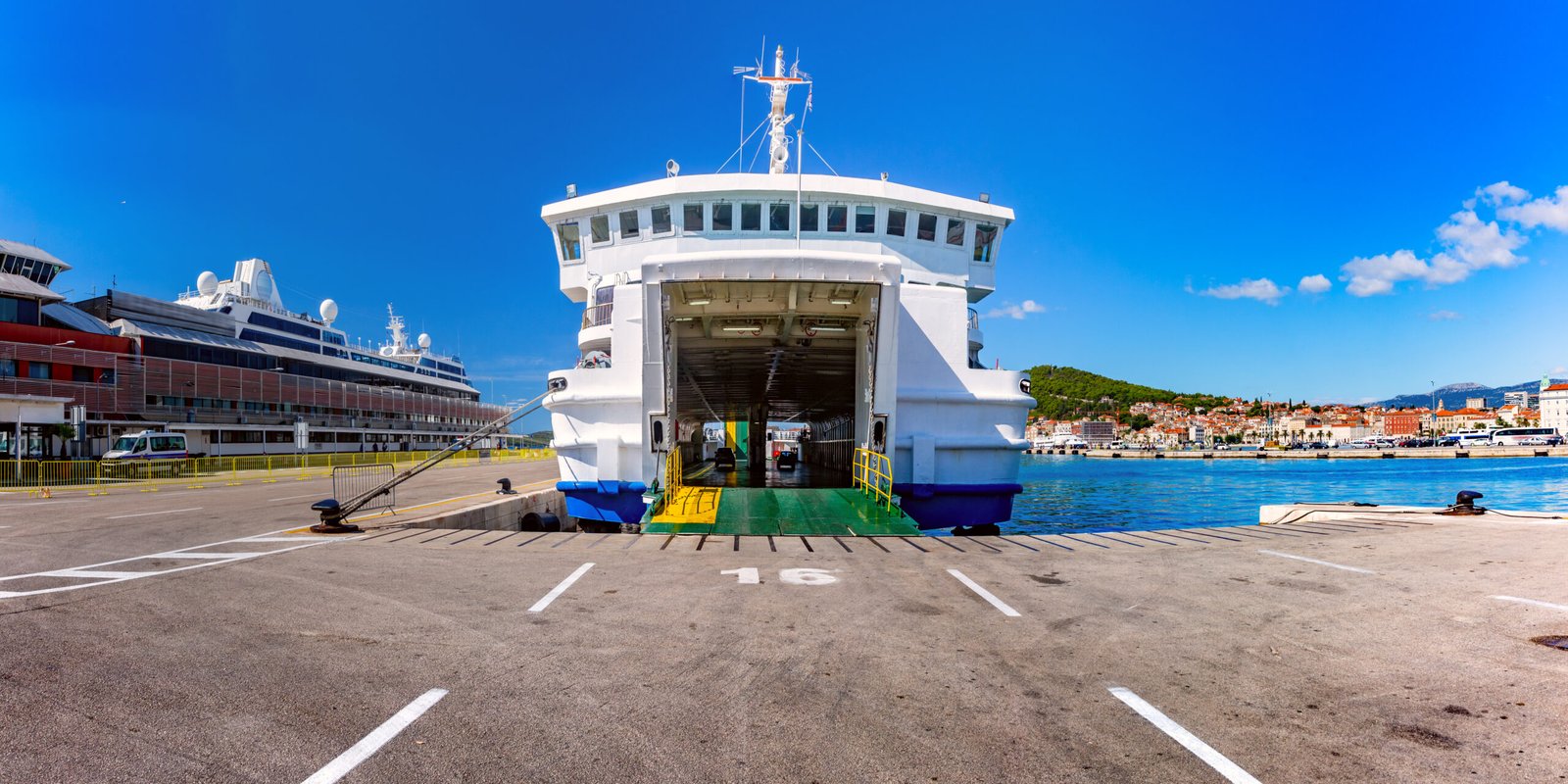
The River Gambia is one of West Africa's great waterways and one of The Gambia's greatest structural challenges. It runs through the heart of the country from east to west, and every day thousands of Gambians wait at deteriorating crossing points for ferries that run on uncertain schedules, carrying more passengers than they were designed to hold, docking at facilities that have not been meaningfully upgraded in decades. The most critical crossing in the country, the Banjul to Barra connection linking the capital to the North Bank Region, has for decades operated with aging vessels and inadequate terminal facilities. A journey that should take thirty minutes routinely requires hours of waiting. Goods spoil. Patients in transit to hospitals face life-threatening delays. Workers miss employment. Students miss examinations. Traders miss markets. Elsewhere along the river, the picture is similar or worse. The river that should connect us has for too long divided us. The National Builders Party will change that.
The river that divides us will become the artery that connects us. A network of modern ferry terminals linked by reliable, scheduled services, with crossings that run on time, vessels that are safe and comfortable, and terminals that reflect the dignity of the communities they serve. Where a farmer in Foni can get her produce to northern markets before it spoils. Where a patient on the north bank can reach emergency care on the south without gambling on whether the ferry is running. Where a tourist arriving at Janjanbureh steps off a vessel onto a terminal that makes them feel welcomed rather than tolerated. Where the north bank and south bank are not two different economic realities but one connected Gambian nation. Seamless. Safe. On schedule. Every day.
The NBP will establish the National River Transport Authority as the statutory body responsible for regulating, licensing, and overseeing all ferry and river transport operations across The Gambia.
The NRTA will set and enforce safety standards for all vessels operating on Gambian waters, issue operating licenses, conduct regular inspections, and publish a public safety record for every licensed operator. A River Transport Safety Regulation framework will establish legally binding standards covering maximum vessel capacity, mandatory life jacket provision for every passenger on every crossing, vessel condition and maintenance requirements, crew certification, weather and visibility operating limits, and incident reporting. No operator will be permitted to override a safety suspension for commercial reasons. The days of overcrowded, unseaworthy vessels crossing the River Gambia are over.

The NBP will make the complete reconstruction of the Banjul to Barra crossing its highest infrastructure priority, delivering the most critical river link in the country to international standards within the first term.
New modern terminals on both banks will replace the current deteriorating facilities entirely, built to the national terminal design standard with full passenger amenities, cargo handling infrastructure, vehicle lanes, digital ticketing, and disability access. New vessels suited to the volume and character of this route will be commissioned, with a scheduled service timetable that passengers and freight operators can depend on. The rebuilt crossing will include a dedicated emergency vehicle priority protocol coordinated with the national ambulance and emergency services network, ensuring that a medical emergency on the north bank is never delayed at the river. This crossing connects the capital to the North Bank Region. Its failure has cost Gambians enough. Its reconstruction begins in Year 1.
The NBP will reconstruct the Niumi to Kombo crossing, connecting the country's most populous southern region to the North Bank, with new terminals on both banks and a scheduled service integrated with the national bus network.
Farmers from Niumi sell produce in Kombo markets and workers commute across the river daily. The inadequacy of the current crossing suppresses economic activity on the north bank and raises the cost of goods across the region. New modern terminals on both banks will be built to the national standard. A scheduled service will be coordinated with bus connections on both banks, allowing passengers to complete their full journey without extended waits at either end. A dedicated cargo crossing window during off-peak hours will allow agricultural trucks, market goods vehicles, and logistics operators to cross without competing with passenger vehicles for space. This crossing will be completed within the first term.
The NBP will develop the Foni to Badibu crossing via Kiang, opening trade corridors that have been economically dormant for lack of infrastructure and directly connecting southern agricultural communities to northern markets.
At present, communities in Foni and Kiang are effectively cut off from direct access to the North Bank markets that should be their primary trading partners. Goods travel long distances by road rather than crossing the short stretch of river that separates them. A combined passenger and cargo ferry service with new terminals on both banks, connected by paved access roads maintained to a year-round standard, will open these corridors. The service will be scheduled around the agricultural calendar, with increased frequency and cargo capacity during harvest periods. A riverside market facility at the north bank landing point will give farmers from the south direct access to the northern trading network for the first time.
The NBP will invest in both crossings serving Janjanbureh Island simultaneously, restoring reliable daily connections for residents while building the tourism-quality experience this historic town deserves.
Janjanbureh sits on an island requiring crossings to both the north and south banks. These crossings are essential for daily movement and for the town's significant but underdeveloped tourism potential. New terminals on the island and both mainland banks will be designed with Janjanbureh's historic character in mind, reflecting the town's identity in the architectural treatment of the terminal buildings. Vessels will meet passenger comfort standards appropriate for a tourism destination, with shaded seating, clean facilities, and the visual quality that makes an arrival at Janjanbureh a genuinely pleasant experience. A tourism river experience programme, developed with the tourism sector, will package the Janjanbureh crossing as part of a wider river tourism itinerary.
The NBP will apply a national terminal design standard to every ferry terminal built or rebuilt under the programme, ending the era of bare concrete jetties with no shelter, no facilities, and no information.
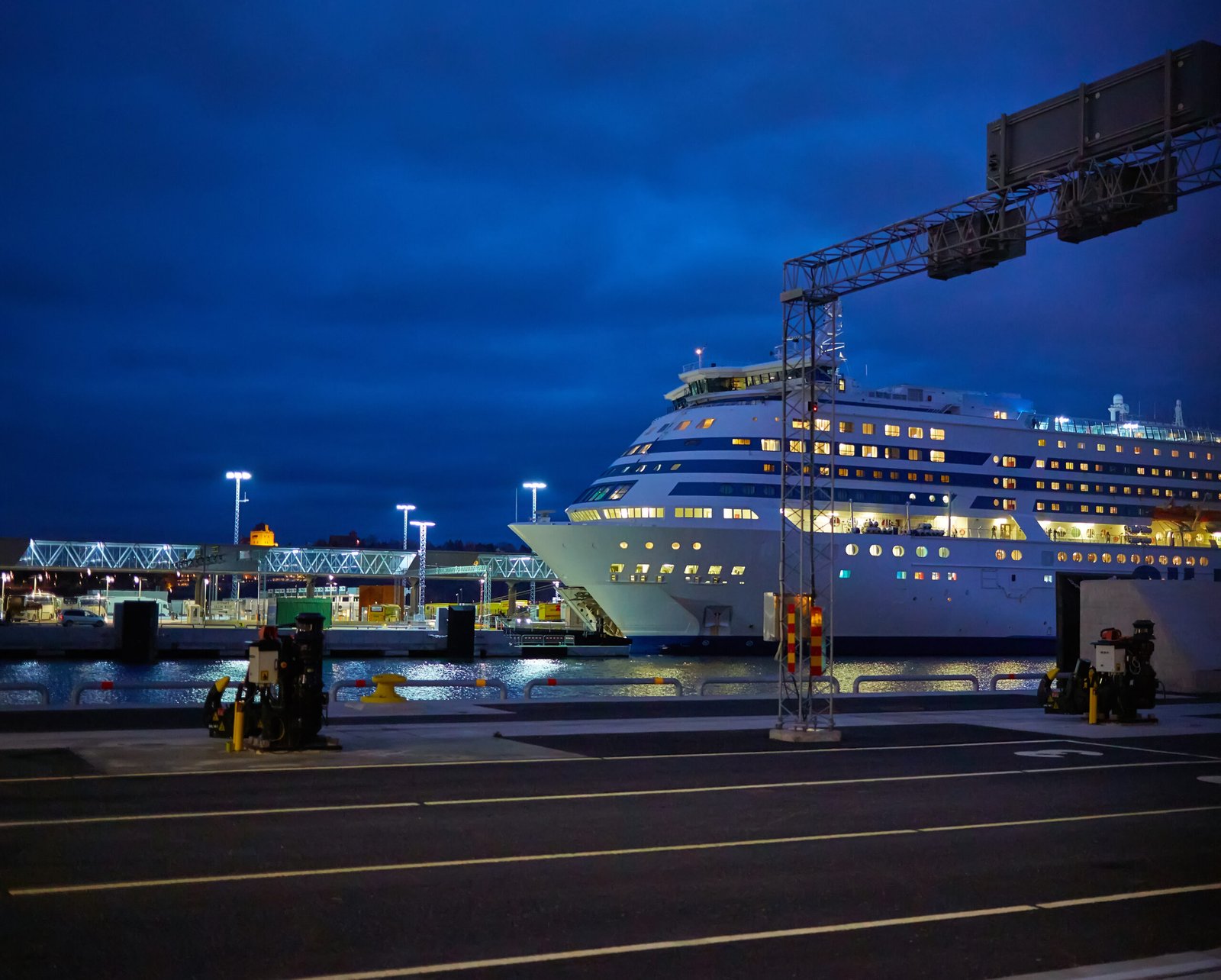
Every terminal will include covered waiting areas with seating for peak passenger volumes, separate zones for foot passengers and vehicle passengers with clear signage in English and major Gambian national languages, clean toilet facilities with separate provision for men, women, and persons with disabilities, a free drinking water point, a small licensed commercial area for food and beverage vendors, a digital information board displaying current timetables and fares, a disability-accessible ramp and boarding gangway, and a ticketing hall with digital kiosks and mobile payment options. Cargo terminals will include dedicated vehicle staging areas, a weighbridge, a customs and inspection point, and a cold storage facility for perishable goods. A modern ferry terminal is a gateway to a community. It should reflect well on the nation that built it.
The NBP will ensure that every ferry terminal is connected to the national road network by a paved access road, integrated with the national bus system, and fully incorporated into the emergency services response network.
A crossing that cannot be reached in the rainy season is not a crossing. Every terminal reconstruction project will include as a mandatory component the construction or rehabilitation of a paved access road connecting it to the nearest classified road in the national network. Designated bus stops and taxi waiting areas within every major terminal, coordinated ferry and bus timetables, and a single integrated ticketing platform through the NRTA mobile application will allow passengers to plan and complete their full journey without extended waits. When a seriously ill patient needs to cross the river to reach specialist care, the crossing cannot be optional. Every major terminal will have a dedicated emergency vehicle priority lane and a protocol ensuring that ambulances and emergency vehicles board without delay.
The National Builders Party will plan for fixed bridge crossings at strategic points along the River Gambia as the long-term complement to the ferry network, completing the physical unification of the Gambian nation.
Ferries are the immediate, deliverable solution. Bridges are the permanent one. The NBP will commission technical and engineering feasibility studies for fixed bridge crossings at the highest-priority locations, with the results informing a National River Crossing Long-Term Infrastructure Plan published at the end of the first term. International engineering consultants from countries with riverine infrastructure experience, including the Netherlands, Germany, and Japan, will be engaged to bring expertise in designing structures suited to the scale and conditions of the River Gambia. The ferry terminals built in the first and second terms will serve as the foundation of a national river crossing network that bridges will eventually complete, connecting every Gambian on both banks without ever waiting for a vessel again.
For North Bank Communities
Reliable crossings mean your produce reaches Kombo markets before it spoils. Your children get to school on time. Your family member who needs specialist care in Banjul gets there without gambling on whether the ferry is running. Workers who live on the north bank but work on the south can commute with confidence rather than with resignation. The north bank has waited long enough. The National Builders Party will deliver the connections it deserves.
For Young Gambians
A reliable river crossing changes what is possible for every young Gambian on either bank. You can study at a school on the other side. You can take a job in a city across the river. You can sell your produce or your goods in markets that were previously too far and too unreliable to reach. And if you are a young Gambian who wants to work in infrastructure, logistics, vessel operations, or terminal management, the ferry network the NBP is building will need Gambian workers and Gambian expertise to run it.
For Every Family
A crossing that runs on schedule, with vessels that carry life jackets for every passenger, at terminals with clean facilities and clear information, changes the daily experience of being Gambian. It means the river is no longer something you dread crossing. It is something your country built to serve you. Social cohesion follows physical connection. When north and south bank communities can move between each other easily and reliably, the psychological divide that geography has imposed begins to close. One nation. One river. Connected.
In The Gambia the National Builders Party builds, the River Gambia connects rather than divides. Every major crossing runs on a published timetable that passengers and freight operators can depend on. Every vessel carries life jackets for every passenger and is inspected and certified before it operates. Every terminal has shelter, clean toilets, drinking water, disability access, and digital ticketing. Every terminal access road is paved and passable year-round. Every emergency vehicle can board without waiting. Agricultural goods move from farm to market across the river before they spoil. A patient on the north bank can reach specialist care on the south without uncertainty. The north and south banks are not two different economic realities. They are one connected nation, built that way by the National Builders Party.
The river that divides us will become the artery that connects us. Modern terminals. Reliable schedules. Safe vessels. Paved access roads. Emergency priority. And on the horizon, bridges that complete the work the ferries began. The National Builders Party will connect every Gambian across the water.