

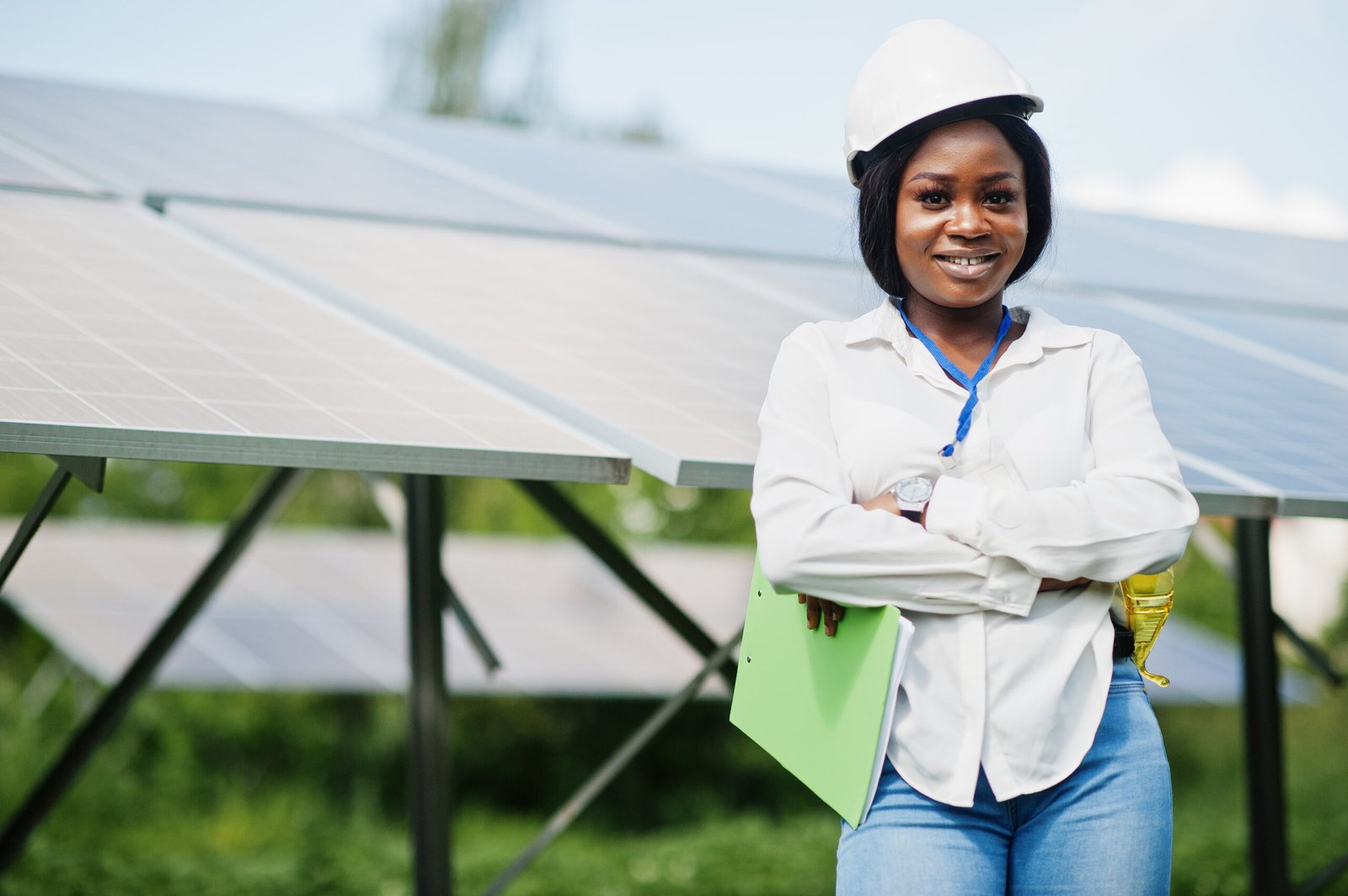
Electricity is the backbone of any modern economy. It powers homes, schools, hospitals, businesses, and industries. The Gambia has been running without a reliable backbone for too long. Frequent power outages are not an occasional inconvenience. They are a structural economic constraint that affects every dimension of national life. Businesses cannot run equipment without expensive backup generators. Hospitals cannot guarantee cold chains for vaccines. Students cannot study reliably after dark. Small enterprises cannot invest in electricity-dependent machinery when the power may not be there tomorrow. NAWEC generates power expensively on imported fuel oil, loses a significant share of that power to technical and commercial losses before it reaches paying customers, and collects revenue below its cost of service. In rural areas, the picture is starker. The national grid covers a fraction of the country's land area and an even smaller fraction of its rural communities. Villages across the Central River Region, the North Bank Region, and the Upper River Region have no grid connection and no reliable off-grid alternative. Children study by candlelight or not at all after dark. The energy crisis is not separate from the development crisis. It is the same crisis. The National Builders Party will end it.
A Gambia where power is reliable enough to plan around. Where a business owner can run machinery without a generator. Where a teacher can use a projector. Where a nurse can keep vaccines cold. Where a family can charge a phone, run a fan, and watch television without uncertainty about whether the power will be on tomorrow. Where the rural village and the urban street are connected to the same national energy system, built on a diversified mix of generation sources that are increasingly Gambian rather than imported, increasingly renewable rather than fossil-fuelled, and increasingly affordable as the investment matures. Reliable energy is the power behind every dream, every industry, and every family in The Gambia. The National Builders Party will build the system that delivers it.
The NBP will enact a comprehensive National Energy Policy in its first year, setting measurable targets for generation, reliability, rural electrification, and renewable energy, and will restructure NAWEC into a more efficient, transparent, and commercially sustainable institution.
The National Energy Policy will guide all energy sector decisions across the full NBP term and a 25-year long-term horizon. It will set reliability targets, electrification coverage goals, and renewable energy share targets, and will eliminate the overlapping institutional mandates that have historically confused accountability. NAWEC will be restructured into separate generation, transmission, and distribution divisions, reducing conflicts of interest and improving efficiency at each stage of the energy chain. A professional, independent NAWEC Board will be appointed with the authority to run the institution commercially without day-to-day political interference. Audited accounts will be published annually. A reformed Customer Service Charter will commit NAWEC to defined response times and service quality standards, with a national customer service platform for complaints and grievances.

The NBP will modernize the national electricity grid from generation through transmission to the last-mile distribution connection, installing smart metering, automatic fault detection, and load-balancing systems that make the grid genuinely reliable.
A nationwide grid technical audit, conducted in Year 1, will assess every element of the existing infrastructure and identify the highest-priority repair, replacement, and upgrade requirements. Outdated transmission lines and substations will be replaced to reduce energy losses and improve safety. Regional substations and distribution hubs will be established to serve growing urban and peri-urban populations. Smart metering systems will be rolled out starting with commercial and industrial customers in the Greater Banjul Area, providing real-time consumption data that enables accurate billing, demand management, and loss reduction. Solar power systems will be installed on all government buildings and schools as an immediate reliability measure, reducing the drain on the grid from public institutions and demonstrating the government's commitment to the renewable transition.
The NBP will establish a transparent Independent Power Producer framework, creating the conditions for private investment in electricity generation under government regulation and opening the sector to the competition that drives down cost and drives up reliability.
The IPP model is the most powerful tool available to accelerate generation capacity growth without placing the full investment burden on the national budget. A standardised Power Purchase Agreement template will give IPPs a predictable contractual framework that reduces transaction costs and regulatory uncertainty. Open, competitive IPP tendering for defined capacity tranches will award contracts on the basis of lowest cost per unit delivered to the grid. All IPP agreements will include local content requirements specifying Gambian employees, contractors, and materials in both construction and operations. The government will provide land access on reasonable commercial terms, grid connection facilitation, and a credible payment guarantee. A dedicated IPP Coordination Office within the Ministry of Energy will manage procurement, oversee government obligations, and monitor performance against contractual commitments.
The NBP will launch the Gambia Green Energy Initiative to drive a substantial and growing share of national electricity generation from renewable sources, led by solar but supported by wind, biomass, and regional hydropower.
The Gambia has some of the highest daily solar irradiance levels in the world. Turning that natural advantage into national power is not an aspiration. It is an engineering commitment. Utility-scale solar projects procured through the IPP framework will supply significant new renewable generation capacity to the grid. A Net Metering Regulation will allow households and businesses with rooftop solar to sell surplus power back to the grid, incentivising private solar investment at every scale. A national wind and tidal resource assessment in Year 1 will determine whether coastal energy projects can make a meaningful contribution. Biomass energy pilots at agricultural processing facilities and at the Bakoteh dumpsite will convert organic waste into electricity and cooking gas. The West African Power Pool will be pursued as a regional supplement, enabling The Gambia to import low-cost regional hydropower and export surplus generation.
The NBP will implement the National Rural Electrification Programme with the explicit goal of achieving universal household electrification across The Gambia by 2035, using the technology that is right for each community rather than forcing every village to wait for grid extension.
Grid extension will serve communities within economically justifiable distance of the existing network with sufficient population density. Mini-grids, solar or hybrid solar-diesel systems, will serve communities too distant from the main grid but large enough to support a dedicated local system. Solar home systems will provide the first tier of electricity access for the most dispersed rural communities where neither grid extension nor mini-grids are currently economic. A dedicated NREP Project Management Unit will oversee delivery, managing community engagement, contractor procurement, quality assurance, and operational handover. Every installation will be designed with its long-term maintenance model defined before construction begins, ensuring systems keep running after commissioning rather than deteriorating without support.
The NBP will support the development of Community Energy Cooperatives as the preferred ownership and management model for rural mini-grids, because the most sustainable rural energy systems are those owned and managed by the communities they serve.
External management of rural energy systems has a poor track record globally when the external manager has no long-term commitment to the community and no accountability to local users. A National Community Energy Cooperative Programme will provide training, legal formation support, and initial technical advisory services to communities wishing to establish cooperatives to own and manage their electricity supply. Cooperative members will pay a connection fee and regular tariff that covers operational costs, with subsidies available for low-income households. Government technical support through regional energy offices will provide engineering advice, equipment procurement support, and troubleshooting assistance. Productive use of electricity will be promoted alongside electrification: agricultural equipment, grain mills, cold storage, and agro-processing tools will be connected in electrified communities to generate the income that makes the electricity investment economically transformative.
The NBP will establish a transparent, tiered tariff structure that ensures affordability for low-income households, supports cost recovery for a sustainable energy system, and is set through an open regulatory process that consumers can understand and trust.
A Lifeline Tariff will guarantee that low-income households pay a subsidised rate for a basic level of electricity consumption, funded through the national social protection registry. Tariff changes above the defined Lifeline threshold will require a formal PURA regulatory process with public consultation, published justification, and a minimum notice period before implementation. A published tariff schedule, available at every NAWEC office and online, will ensure that every customer knows exactly what they will be charged before they use power. PURA, the Public Utilities Regulatory Authority, will be strengthened with independent funding, genuine enforcement powers, and a clear mandate to protect consumers, enforce service standards, and oversee tariff fairness. A national energy literacy campaign will educate citizens on billing, conservation, and usage efficiency.
The National Builders Party will build The Gambia's energy security through strategic international partnerships, reduced dependence on imported fuel, and the diversified generation mix that insulates the national grid from external price shocks.
NAWEC's heavy dependence on imported heavy fuel oil makes the cost and reliability of Gambian electricity hostage to global oil markets. The NBP will systematically reduce this dependence through the renewable energy programme and by exploring the transition to natural gas, which burns more cleanly and at lower cost than heavy fuel oil. Partnerships with the World Bank, the African Development Bank, GIZ, and bilateral development partners will fund and support the infrastructure investment that the energy reform programme requires. Performance-based management contracts with global utility experts will be explored for specific elements of the NAWEC operation where international expertise can accelerate institutional improvement. A 25-year National Energy Master Plan, updated every five years, will guide investment decisions across government terms, ensuring continuity regardless of political cycles.
For Households and Families
A minimum of 22 hours of reliable power per day in all grid-connected urban areas by Year 3, rising to 24 hours by Year 5. A Lifeline Tariff that protects low-income households from unaffordable bills. A published tariff schedule so you always know what you will be charged. A national complaints platform that handles grievances with defined response times. And if you are in a rural community without a grid connection today, the National Rural Electrification Programme has a pathway to your village. Power is coming. It is in the plan.
For Young Gambians
Reliable electricity transforms what is possible for your generation. It means studying after dark without candlelight. It means running a business without a generator eating your profits. It means a health post in your community that can keep vaccines cold and power equipment. The Gambia Green Energy Initiative and the IPP framework will also create jobs in solar installation, grid operations, smart metering, and energy cooperative management, building the local technical workforce that operates the national energy system rather than depending on foreign expertise indefinitely.
For Every Business
A business that can plan around a reliable power supply is a more productive business. Equipment can be scheduled. Refrigeration can be trusted. Digital systems can run continuously. The generator costs that currently represent a major operational expense for Gambian businesses will fall as grid reliability improves and the renewable share of generation grows. When the cost of power falls and its reliability rises, every Gambian business becomes more competitive, every factory becomes more productive, and every investment in machinery becomes a better bet. Energy reform is economic reform. The National Builders Party will deliver both.
The New National Standard in energy is non-negotiable. When a nurse arrives at a health post, the power is on. When a student sits down to study after dark, the lights are working. When a business owner turns on the machines in the morning, the supply is there. When a family cooks a meal, they have the power to do so without a generator, without a candle, and without the uncertainty that has defined Gambian daily life for too long. Every village has an electricity supply suited to its geography. Every household has a tariff it can understand and afford. Every customer has a complaints process that works. NAWEC publishes its accounts and meets its service targets. PURA enforces standards without political interference. Renewable energy grows as a share of the national generation mix every year, reducing dependence on imported fuel and the price volatility that comes with it. The National Builders Party will build this standard, light by light, village by village, year by year, until The Gambia is fully powered.
Reliable energy is the power behind every dream, every industry, and every family in The Gambia. Without it, everything else this manifesto promises is harder to deliver and harder to sustain. The National Builders Party will light up every corner of this nation, bringing with it prosperity, dignity, and opportunity for all Gambians.