

The Gambia has almost no functioning public library infrastructure. What exists is limited to a small number of urban facilities concentrated in and around Banjul and Serrekunda, that are chronically under-funded, under-stocked, and under-staffed. For the overwhelming majority of Gambians, particularly those in rural and peri-urban areas, a public library simply does not exist. A student in Kerewan who wants to study beyond what their school provides has nowhere to go. Teachers seeking professional development resources find none. Small business owners cannot access business guides. Citizens who want to understand their legal rights or their health cannot find that information in a trusted public space. This is not a minor gap. It is a foundational absence. Every country that has invested seriously in public libraries has seen measurable returns in literacy, academic performance, and economic productivity. The Gambia has been paying the price for not doing so. The National Builders Party will change that.
Imagine a Gambia where every community has a library that is open six days a week, free to every resident, staffed by a qualified librarian, and connected to the internet. Where every student has a safe, quiet, well-lit place to study with the materials they need. Where children discover the joy of reading before they are old enough to know it will shape their whole lives. Where elders share their stories into a microphone and those stories become part of the permanent national heritage. Where a small business owner in Basse finds the same business development resources available in Banjul. A nation that reads is a nation that leads. Under the National Builders Party, The Gambia will read.
The NBP will establish the legal right of every Gambian to free access to public library services, regardless of location, income, age, or educational level.
The National Public Libraries Act will create the National Library Authority as the governing body for the entire network, establish the National Library Fund as a ring-fenced budget that cannot be cut by annual pressures, and set minimum standards for facilities, collections, staffing, and services that every library must meet. The Act will also introduce a National Legal Deposit requirement, making it law for every publisher, printer, and digital content producer in The Gambia to deposit copies of every new publication with the national library system, building a permanent, comprehensive record of Gambian intellectual and cultural output.

The NBP will build 50 community libraries across every district in The Gambia, with sites prioritized for areas with the weakest access to educational infrastructure.
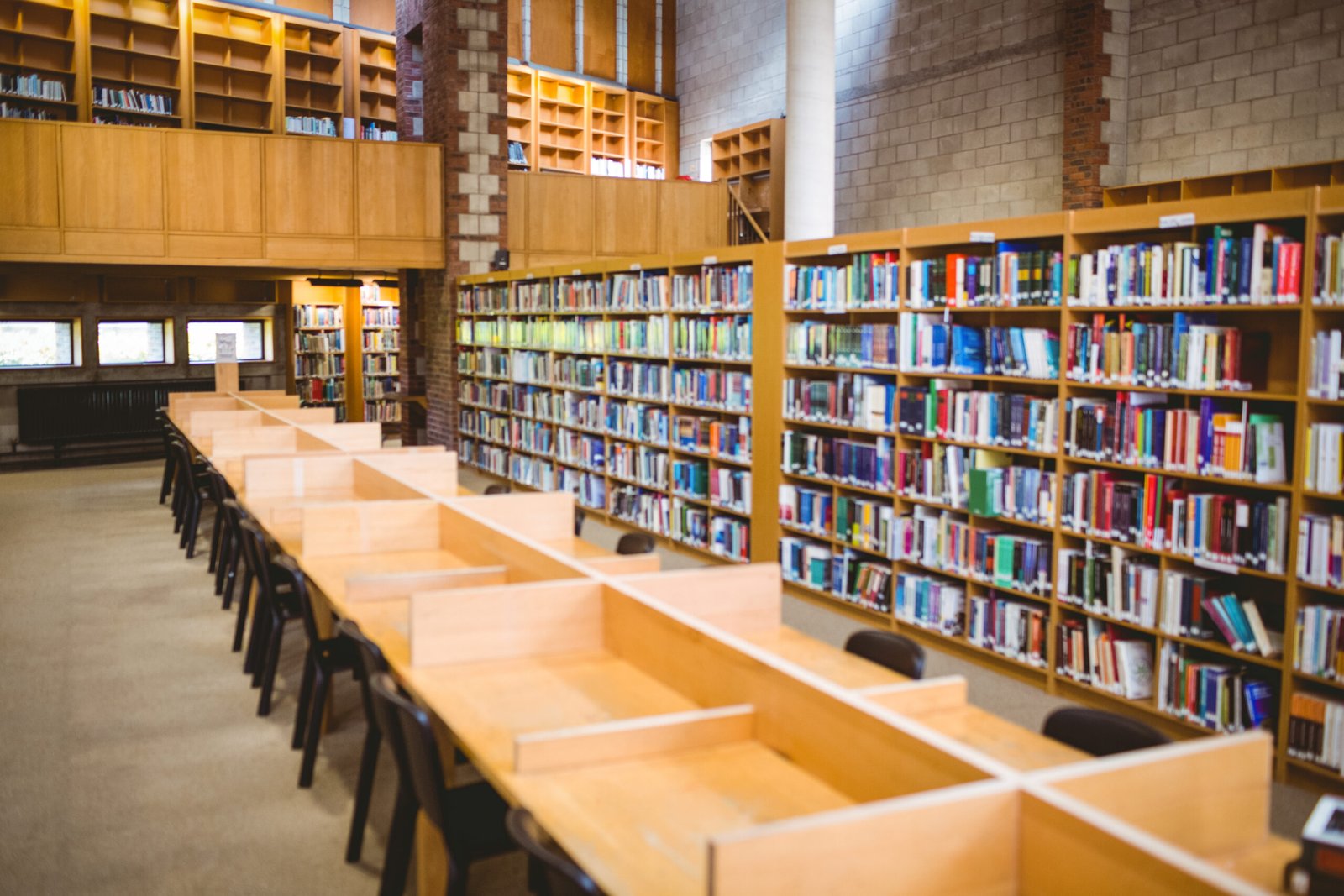
Every community library will serve as a direct extension of the school system, providing the quiet, safe, technology-equipped study environment that many Gambian homes and schools cannot offer. Each library will include a reading hall, dedicated quiet study zones, group discussion areas, tutoring rooms, a children's reading room, a minimum of 10 internet-connected workstations, book storage, and an administrative office. Buildings will be designed with natural lighting and energy-efficient construction suited to the Gambian climate. All libraries will have broadband internet with solar power backup, free public Wi-Fi extending to outdoor seating areas, and printer and scanner access for every visitor. Every library will be open seven days a week: 8 AM to 8 PM on weekdays, 8 AM to 6 PM on Saturdays, and 10 AM to 4 PM on Sundays. A free Library Card, valid at any library in the national network, will be issued to every registered borrower.
The NBP will construct 11 Regional Resource Libraries in major town centers as flagship academic and cultural institutions serving their entire regions.
Regional Resource Libraries will be established in Banjul, Brikama, Serrekunda, Farafenni, Bansang, Brikama Ba, Kerewan, Barra, Gambisara, Bwiam, Basse, and Soma. Each will be a substantial, architecturally distinguished public building with a minimum of 40 internet-connected workstations, specialist services, a Small Business Resource Centre, a Gambian Heritage Collection, seminar and programme rooms, and hearing loop systems for accessibility. These flagship libraries will hold substantially larger collections than community libraries and will serve as the academic and cultural anchors of the network in their regions.
The NBP will design and build the National Library of The Gambia, opening in Year 5, as the apex institution of the national library network and the permanent custodian of the country's documentary heritage.
The National Library will house the most comprehensive collection of materials about The Gambia and by Gambian authors anywhere in the world. It will hold the National Archive, a Legal Deposit Centre, a National Bibliographic Database accessible online by researchers globally, a conservation and preservation laboratory for restoring fragile historical materials, exhibition galleries celebrating Gambian history and literary achievement, and an international library exchange programme connecting it with peer institutions in the United Kingdom, United States, Senegal, and other partner countries.
The NBP will launch a national digital library platform giving every Gambian with an internet connection access to e-books, academic journals, historical archives, and educational resources at no cost.
The portal will include a searchable catalogue of all physical holdings across the entire network, a growing e-book and academic journal collection for registered cardholders, a national newspaper and periodicals archive, the Gambian Digital Heritage Collection, audio books in English and Gambian national languages, and a student homework portal with past examination papers and curriculum-aligned study materials. The portal will be accessible by computer, tablet, and mobile phone, with a lightweight version optimized for low-bandwidth connections so that rural communities are not excluded.
The NBP will mandate that every public library runs a core programme of children's and youth services designed to build a reading culture from the earliest years.
Every public library functions as a direct extension of the school, giving students the supplementary resources, quiet space, and internet access they need to improve their examination results and prepare for competitive further education. After-school homework clubs running every weekday from 3 PM to 6 PM provide a supervised, resource-rich study environment where students can access materials that go beyond what their classroom can offer. Weekly storytelling sessions, reading challenges, and book clubs serve children from age five through twelve. School group visit programmes bring whole classes to the library for guided research skills workshops and reading enrichment activities. A national Summer Reading Challenge, modelled on proven programmes from the United Kingdom and United States, rewards children for reading during school holidays and keeps learning active year-round.
The NBP will use the library network to deliver free adult literacy classes, digital skills training, and professional development resources to working Gambians in every region.
A National Adult Literacy Programme delivered through all public libraries will offer free basic reading, writing, and numeracy classes in flexible formats including early morning, evening, and weekend sessions. Participants who complete the programme will receive a nationally recognized certificate. Free digital literacy classes will cover basic computer use, email, internet browsing, online government services, and social media safety. Advanced workshops will cover spreadsheets, word processing, and online research. Coding and programming introductory classes will complement the national STEM curriculum for secondary students whose schools are not yet fully equipped.
The National Builders Party will make the public library network the living custodian of Gambian national identity, ensuring that no cultural heritage, language, or community story is lost.
Every Regional Resource Library will house a dedicated Gambian Heritage Collection covering published works by Gambian authors, historical government documents, digitised newspapers and periodicals, oral history recordings from elders across all regions and ethnic communities, maps, photographs, and traditional knowledge materials documenting agricultural practices, medicinal plants, crafts, and music. Collections will be held in all major Gambian national languages, ensuring no linguistic community's heritage is excluded. An oral history recording programme launching in all regions in Year 4 will ensure that living voices and traditions are captured before they are lost.
For Students and Teachers
The library is the school's extension, open when the school is closed and stocked with what the school cannot carry. Every student gains a quiet, supervised place to study, access the internet, and find the supplementary materials that directly improve examination performance and academic preparedness. Tutoring rooms and group discussion areas mean you can work alone or with classmates depending on what the moment needs. Teachers will find professional development materials, curriculum resources, and internet access in their local library at no cost. The Summer Reading Challenge keeps learning alive through the holidays for children across the country.
For Young Gambians
The library is yours from day one, free of charge, with no membership fee and no barrier to entry. Whether you want to code, read, write, research a career, or compete in a debate club, the programmes in every library are designed around you. The Young Writers Programme will give you the chance to see your work archived in the national collection. And the digital skills and coding classes available through every library will put professional-grade tools in your hands regardless of what school you attend.
For Every Family
Small business owners will find registration guides, market research tools, and business development resources at the Regional Resource Library serving their area. Families will be able to access legal self-help resources, health information, and job-seeking support in a trusted public space. Elders will have the opportunity to share their stories and see them preserved permanently as part of the Gambian Heritage Collection. The library is for every generation, every background, and every purpose. It belongs to the whole community.
In The Gambia the National Builders Party builds, every Gambian, wherever they live, whatever their income, whatever their age, has somewhere to go where knowledge is free, information is accessible, and the dignity of learning is honoured. Every library is an extension of the school system: open when the school is closed, stocked with what the school cannot carry, and equipped with the quiet zones, tutoring rooms, internet terminals, and group study spaces that give every student a real pathway to better examination results and a more competitive future. A child can discover the joy of reading. A student can prepare for an examination without distraction. An adult can acquire the skills that change their economic trajectory. An elder's stories are recorded, valued, and preserved for the generations that follow. Every community has a professionally staffed library that is open six days a week, built to last, and running programmes that serve children, adults, entrepreneurs, and elders alike. A nation that reads is a nation that leads. The National Builders Party will build the libraries that make The Gambia read.
A library is not just a building. It is the most democratic institution a government can build: free to everyone, useful to anyone, and open to all. The National Builders Party will put one in every community in The Gambia. Because a nation that reads is a nation that leads.