



Public safety is not a government preference. It is a government obligation. The data is clear. Over ten homicides were recorded in the first two months of 2025 alone, the highest in recorded Gambian history for that period. Armed robberies that were once genuinely shocking have become frequent enough to provoke resigned frustration. Over two tonnes of narcotics are seized annually, with the drug trade feeding directly into violent crime. A courtroom was burned to the ground in 2025, destroying all its physical records with it. The judiciary carries nearly 9,000 pending cases and adds more every year. Only 44 percent of Gambians feel confident that ordinary people can obtain justice. Only 31 percent say they could afford to take a legal problem to court. Only 10 percent are even aware that legal aid services exist. These are not statistics to be managed. They are failures to be corrected. The National Builders Party will correct them.
A Gambia where communities are safe, where crime is met with consistent and swift consequences, and where justice is accessible to every citizen regardless of income, location, or social standing. Where a reformed and properly resourced police force is trusted, present, and effective in every district. Where a rebuilt court infrastructure gives every magistrate a proper courtroom with digital records that cannot be lost in a fire. Where the judiciary clears its backlog and disposes of cases within defined timescales. Where the root causes of crime, including youth unemployment and substance abuse, are addressed alongside the enforcement response. Where organised crime, drug trafficking, and human trafficking are treated as the national security threats they are. Where every Gambian who is wronged has a realistic path to justice.
The NBP will rebuild the Gambia Police Force into a trusted, well-equipped, and fully accountable institution that every community in The Gambia can rely on.
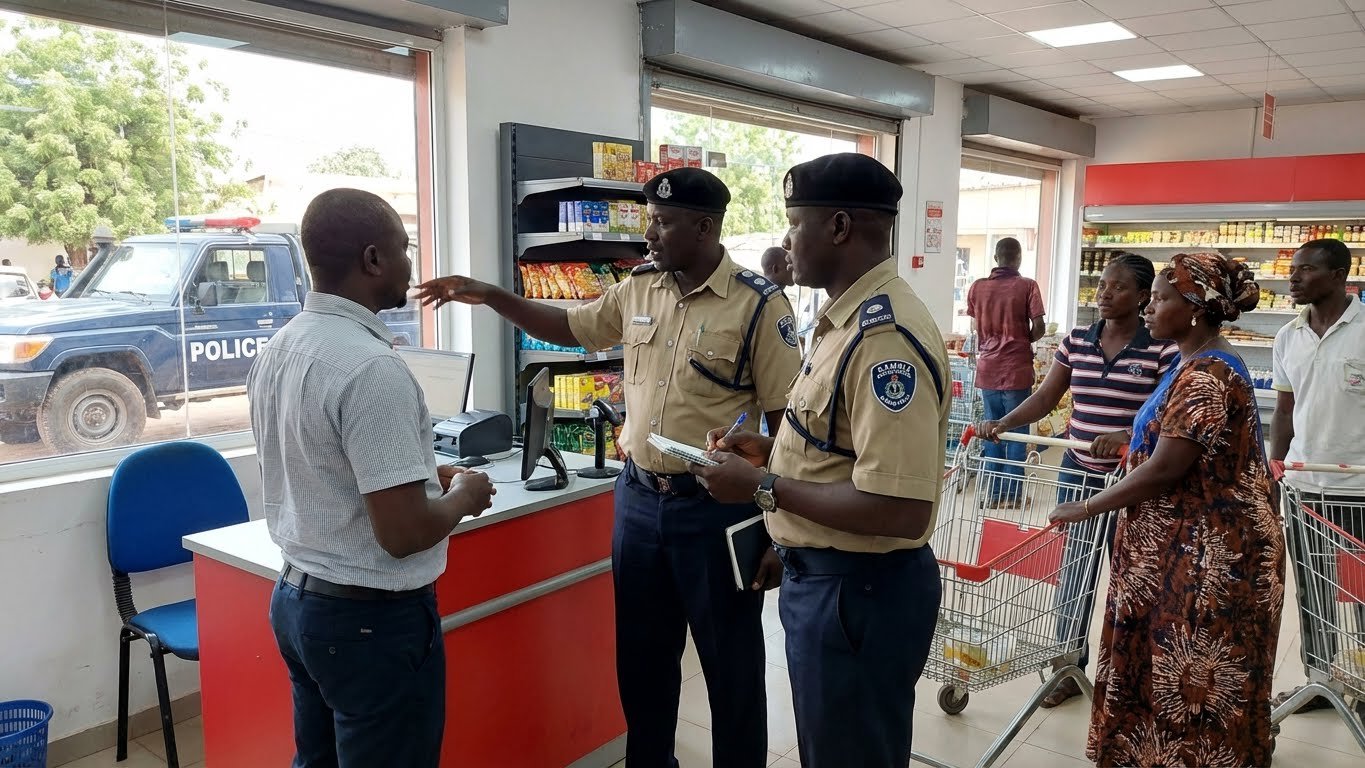
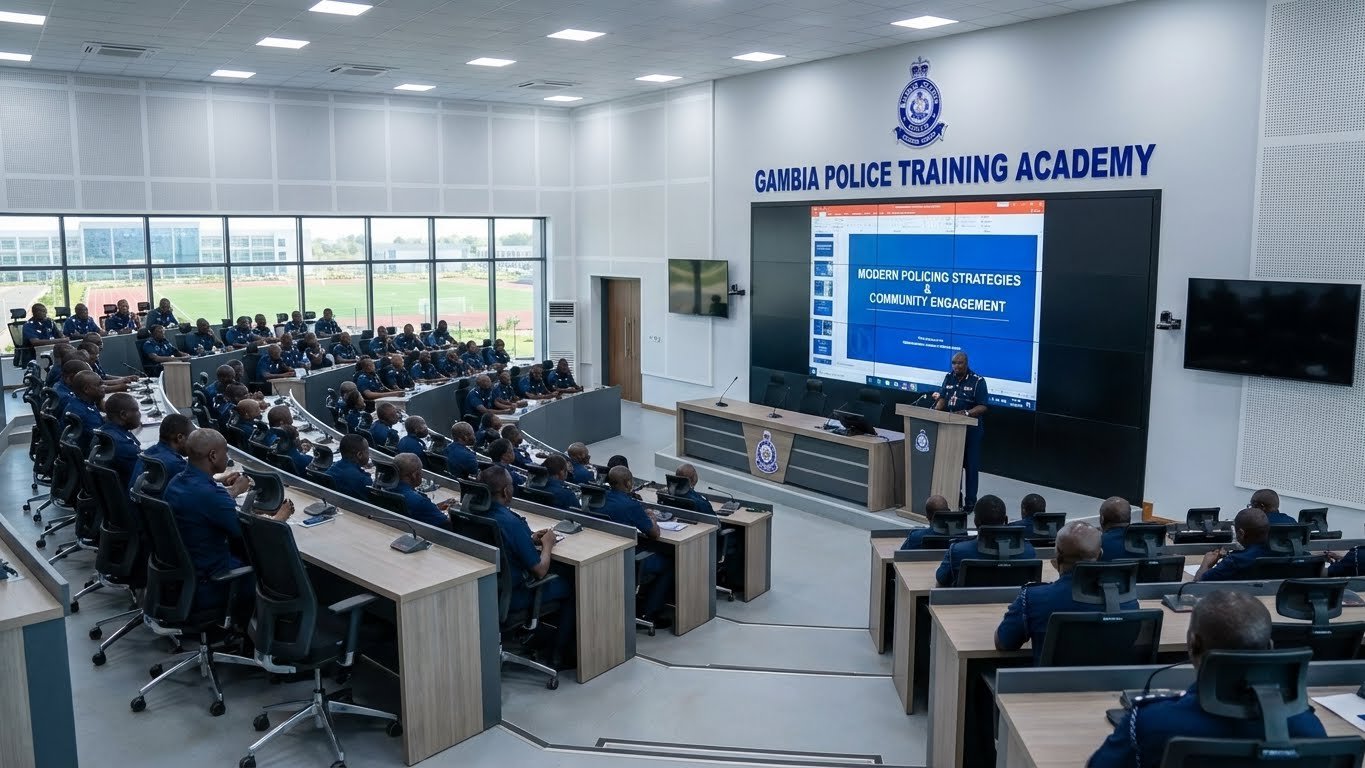
Targeted recruitment will address staffing gaps in the highest-crime districts. An Independent Police Complaints Authority will be established in Year 1 to handle misconduct allegations independently of the GPF chain of command. Body-worn cameras will be rolled out to all frontline officers, beginning with a pilot in Greater Banjul Area. A National Police Academy will deliver a standardised training curriculum covering modern policing, human rights, investigation skills, community engagement, and anti-corruption protocols. Community Safety Officers embedded in neighborhoods will build the relationship between police and residents that makes policing effective. Salary reform will make policing a financially viable career so that the force retains the officers it trains.

The NBP will rebuild the court infrastructure of The Gambia so that justice is physically accessible in every region and digital records make it impossible for a fire to destroy a community's legal history again.
The Farafenni Magistrates Court, destroyed at the end of 2025 with all its records, will be rebuilt as a priority. New Magistrates Courts will be constructed in underserved areas across the North Bank and West Coast Regions. High Court regional sitting venues will open so that cases requiring High Court jurisdiction no longer require travel to Banjul. A Digital Filing and Records System will replace paper files across all courts, with secure cloud backup ensuring no records are ever lost again. The Court Audio Transcription System will be rolled out nationally to replace handwritten notes with verified digital transcripts. Every courtroom will have the physical facilities, technology, and administrative support that justice delivery actually requires.
The NBP will treat the judiciary's near-9,000 case backlog as the justice emergency it is and invest in clearing it as a first-term priority.
The Hurricane Magistrates model, which successfully cleared 82 backlog cases in 2025, will be formalised, funded, and expanded as a permanent national backlog-clearance mechanism. Judicial compensation reform will make Gambian judicial salaries competitive with regional peers so that recruitment and retention no longer depend on seconded foreign judges. An Electronic Case Management System will require mandatory case management hearings within 30 days of filing and every 60 days thereafter, with firm hearing dates that end the culture of repeated adjournment. A Judicial Performance Dashboard maintained by the Office of the Chief Justice and published quarterly will give the public full visibility of case disposal rates and backlog trends by court. The Annual Justice System Performance Report to the National Assembly will hold the judiciary publicly accountable every year.
The NBP will strengthen the Office of the Director of Public Prosecutions and transform legal aid from a marginal service into a genuine pillar of access to justice for every Gambian.
The DPP's office will be substantially expanded with dedicated prosecution teams for homicide, armed robbery, drug trafficking, sexual offences, cybercrime, financial crime, and organised crime. A Fast-Track prosecution protocol for repeat violent offenders and serious drug offenders will ensure the most dangerous members of the criminal community do not remain at liberty for extended periods awaiting prosecution. A Public Defender's Office staffed by government-employed lawyers will guarantee representation for indigent defendants in serious criminal cases. Legal aid mobile clinics will operate on a permanent quarterly basis in every district so that communities outside the capital have access to legal advice without travelling to Banjul. Legal literacy programmes delivered through schools, community centres, and local radio will close the knowledge gap that prevents too many Gambians from seeking the legal help they are entitled to.
The NBP will reform and strengthen the Drug Law Enforcement Agency to shift its focus from seizures to dismantling the trafficking networks that sustain the drug trade and feed directly into violent crime.
An independent integrity review of the DLEAG will be conducted within the first six months of government, addressing the structural conditions that allowed a magistrate to steal court evidence in 2024. An Inspector General of Drug Enforcement, reporting directly to the Minister of Interior, will provide ongoing independent oversight of the agency's operations, evidence handling, and personnel conduct. A digitalised evidence chain of custody will track every seized item from seizure through storage through court presentation, closing the evidence handling gap entirely. Specialist financial intelligence analysts will trace the money flows of trafficking networks. Regional drug enforcement teams will address the border and inland trafficking routes that currently receive insufficient enforcement attention. A National Drug Prevention Programme will be embedded in schools from Year 1.
The NBP will establish a Serious and Organised Crime Unit with a forensic science laboratory, specialist investigative capacity, and real-time intelligence sharing to address armed robbery, human trafficking, and cybercrime as the organised threats they are.
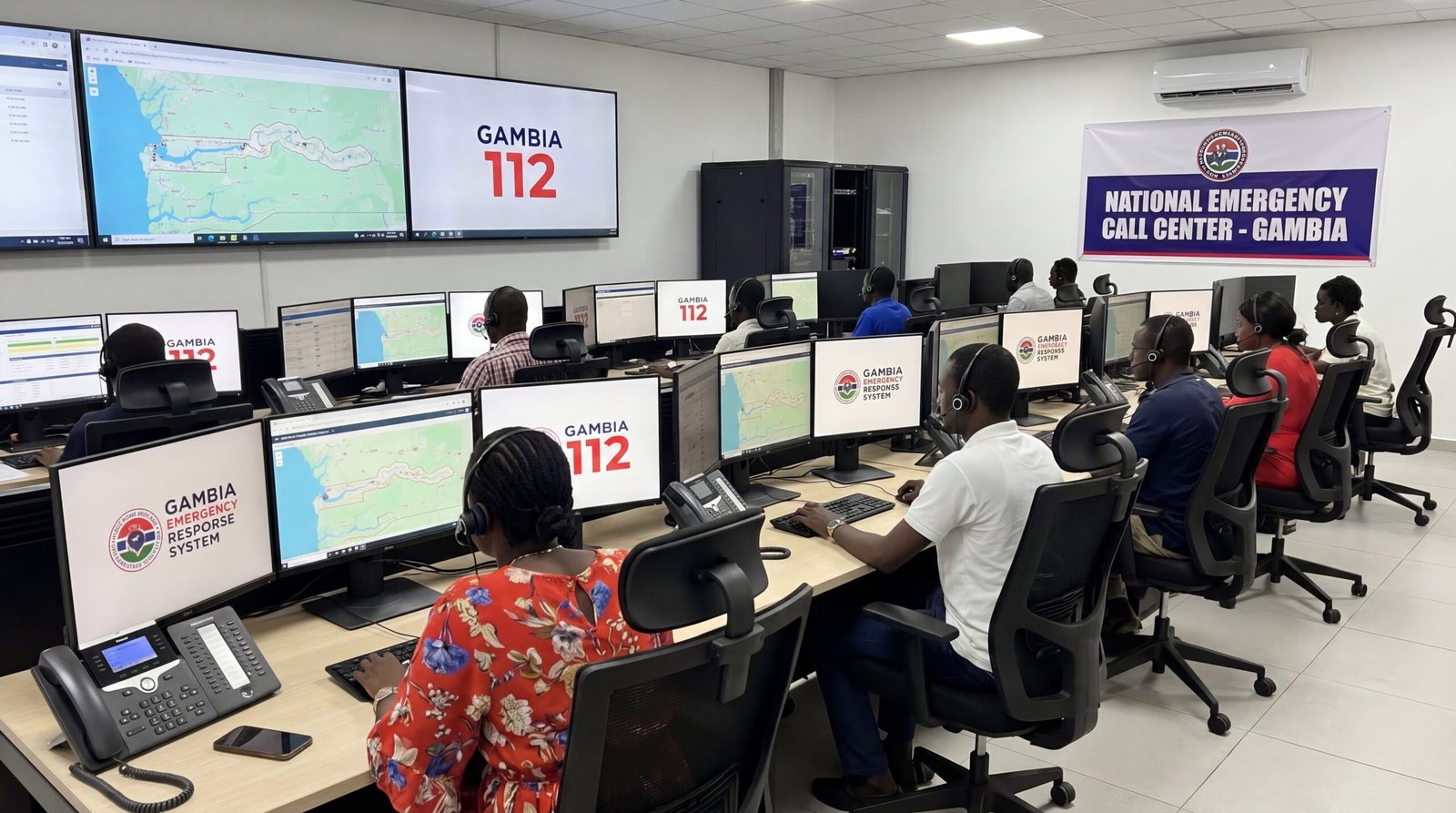
A Forensic Science Laboratory, operational from Year 2, will give Gambian investigators the physical evidence analysis capacity that serious criminal investigations require and that currently does not exist. A dedicated Anti-Trafficking Intelligence Database shared between the National Agency Against Trafficking in Persons, the GPF, the DLEAG, immigration, and the DPP will enable coordinated multi-agency responses to trafficking investigations. A Cybercrime Unit will develop specialist capability for investigating online fraud, identity theft, digital extortion, and the use of digital platforms for organised crime, backed by a new Computer Crimes and Cybercrime Act and a partnership with INTERPOL's cybercrime directorate. A National Anti-Trafficking Intelligence Database will connect every agency working on trafficking into a single shared operational picture.
The NBP will address the root causes of crime alongside the enforcement response, because lasting crime reduction requires changing the conditions that generate crime, not only responding after it occurs.
A national street lighting programme will prioritise high-crime urban areas, recognising that well-lit public spaces deter opportunistic crime. A CCTV and urban surveillance programme covering major commercial areas, transport hubs, and crime hotspots will be developed and operated with clear legal governance on data retention and privacy. Neighbourhood Watch networks coordinated by Community Safety Officers will be established across all major urban communities. A targeted outreach programme for young men aged 16 to 30 in the highest-crime communities will combine mentorship, vocational training referral, and enterprise support. A first-time offender diversion programme will channel young people charged with minor offences into structured community service and counselling rather than custodial sentences that increase the likelihood of reoffending.
The National Builders Party will establish a National Victim Support Service and expand access to alternative dispute resolution so that justice serves people, not just processes.
A National Victim Support Service funded through the Ministry of Justice will provide counseling, legal information, court accompaniment, and practical support to victims of violent crime, sexual offences, and domestic violence. Dedicated GPF domestic violence units in all major police stations, fast-track court procedures for protection orders, and mandatory referral protocols will strengthen the response to domestic violence. A gender-sensitive crime reporting environment, including female officers available to take statements from women who have been assaulted and private interview spaces in all police stations, will increase reporting rates for sexual offences that are currently severely under-reported. Court-connected mediation centres at all major courthouse facilities will offer mediation for land disputes, family property matters, commercial conflicts, and neighbourhood cases before they enter the formal court system.
For Every Community
A police officer who is present, trusted, and equipped. Street lighting that makes your neighbourhood safer at night. A Neighbourhood Watch network that gives your community a formal voice in its own safety. A CCTV system in your commercial area governed by clear legal rules. And a government that measures crime rates annually, publishes the data, and is held accountable if they do not fall. Public safety is a government obligation. The National Builders Party will meet it.
For Young Gambians
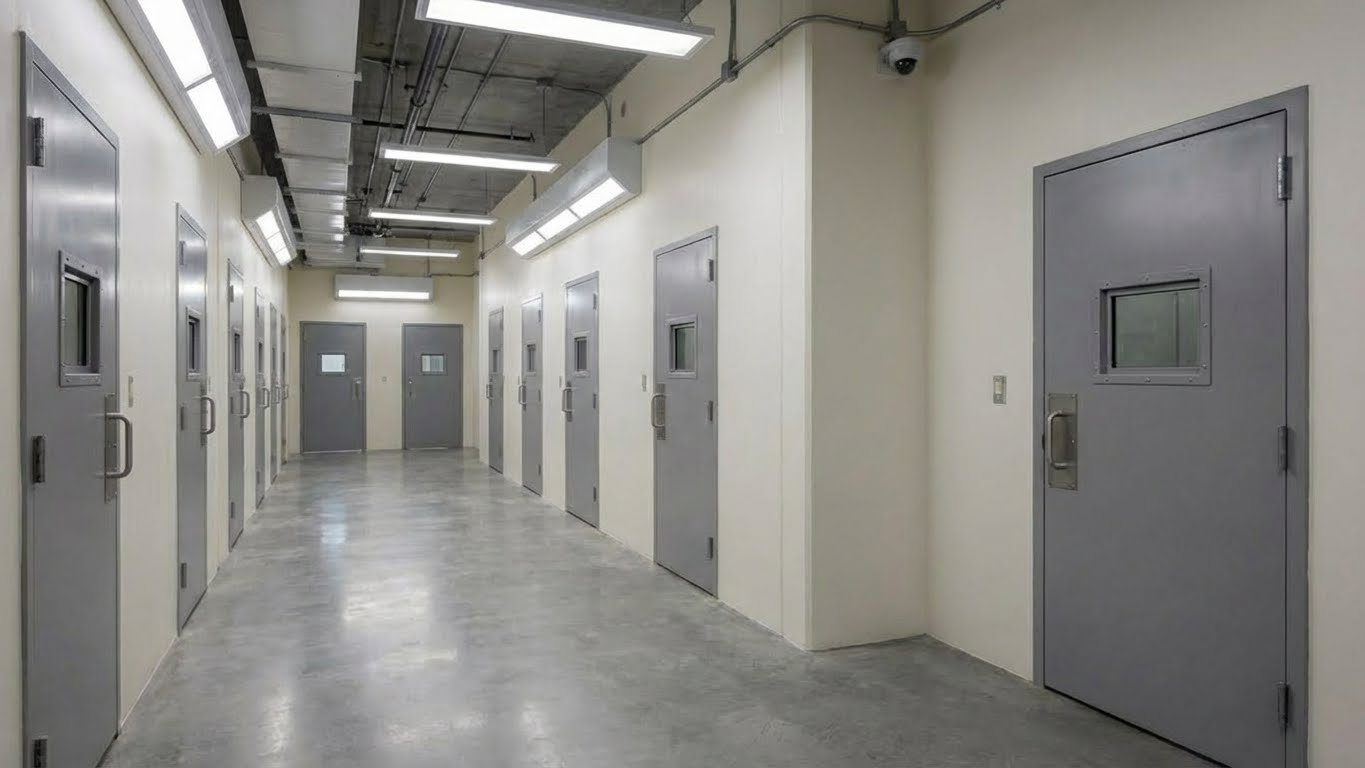
A first-time offender diversion programme means a minor mistake at a young age does not follow you into a criminal record and a prison system where rehabilitation is unlikely. A school-based violence prevention curriculum will give you the tools to recognise gang recruitment and choose differently. A targeted outreach programme in the highest-crime communities will bring mentorship and vocational training to the young men most at risk before the criminal justice system becomes their only structure.
For Every Family
Legal aid mobile clinics in every district mean that when you face a legal problem, you do not have to choose between justice and the money it costs to pursue it. A National Victim Support Service means that if your family is harmed, there is a service ready to help you through the aftermath. Court-connected mediation means that a land dispute or family property matter does not have to consume years in a backlogged court system. Justice will be something every Gambian family can actually access.
The New National Standard in public safety is straightforward: Gambians should feel safe in their communities, and those who harm others should face swift, certain, and fair consequences. Not consequences after years of waiting. Not consequences that dissolve when a family member makes the right call. Not consequences that apply only to people who cannot afford a lawyer. Swift, certain, and fair. That standard requires a police force that is present, trusted, equipped, and accountable. It requires courts that have the rooms, the judges, the digital systems, and the resources to hear cases and dispose of them. It requires a prosecution service that can investigate and prove serious crime. It requires legal aid that reaches the person in every region as reliably as the person in Banjul. It requires drug enforcement that disrupts networks rather than merely seizing shipments. It requires community investment that gives young Gambians a reason not to choose crime in the first place. The National Builders Party will build all of it. Because safety is not a luxury. It is the foundation on which everything else this manifesto builds can stand.
A nation that cannot keep its citizens safe cannot build anything that lasts. Justice and public safety are the foundation beneath every hospital, every school, every business, and every family in The Gambia. The National Builders Party will build that foundation, and build it right.